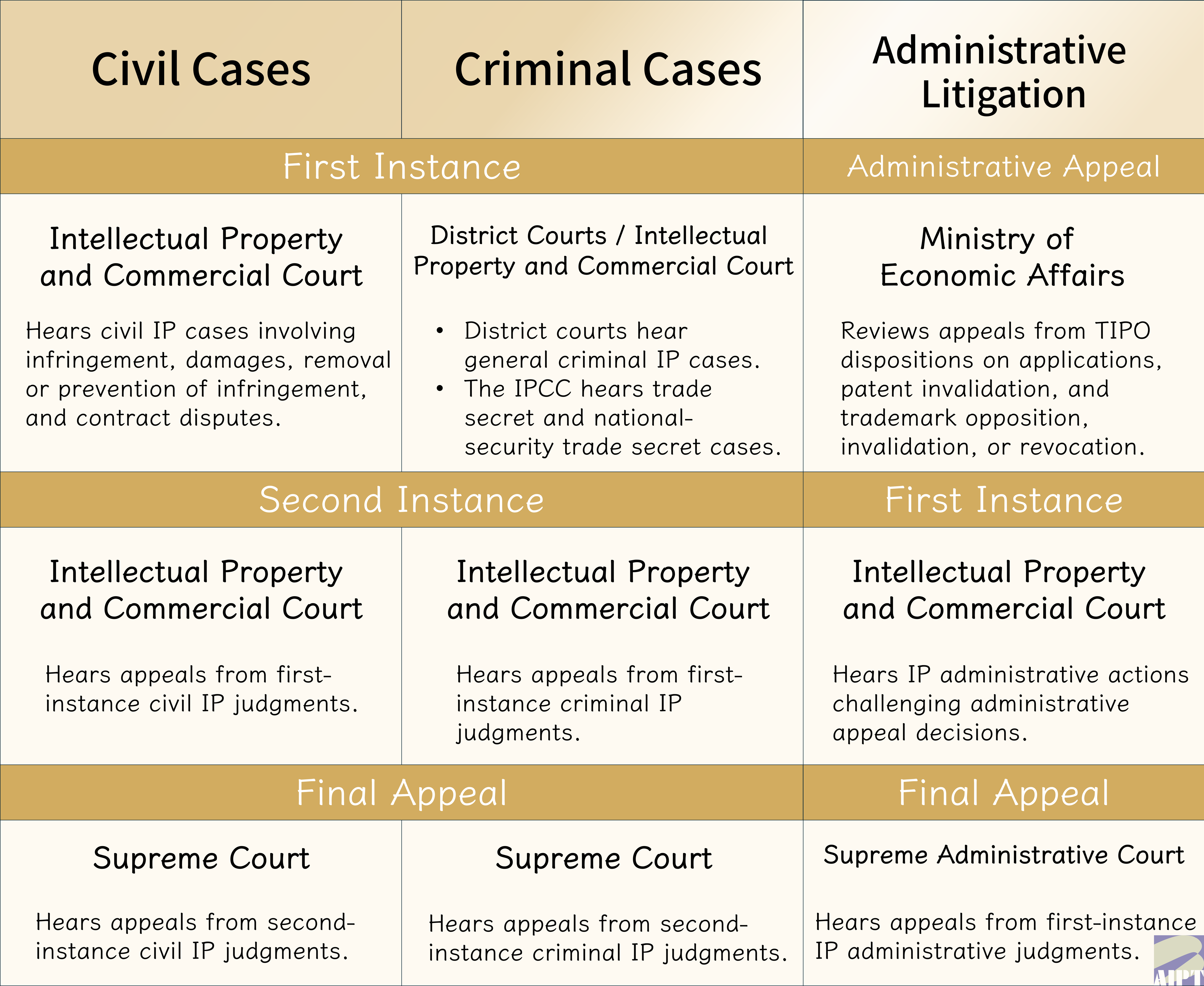
Intellectual Property Litigation Roadmap
Depending on the nature of the dispute, an intellectual property matter may involve civil litigation, criminal proceedings, or administrative litigation. Common matters include patent, trademark, and copyright infringement; trade secret misappropriation; challenges to the validity of intellectual property rights; and challenges to dispositions issued by a competent authority. The applicable procedure and court jurisdiction vary by case type.
Before taking legal action, it is important to identify the nature of the dispute, the legal basis of the rights asserted, the available evidence, and the potential remedies. Parties should also assess whether to begin with negotiations, issue a cease-and-desist letter, seek preservation of evidence or provisional relief, or proceed directly with litigation in order to select an appropriate dispute resolution strategy.
Type
Types of Intellectual Property Litigation
Intellectual property litigation can generally be divided into the following three categories:
01
Civil Litigation
Civil litigation primarily addresses intellectual property infringement and related civil liability. Where a patent, trademark, copyright, or trade secret is infringed or misappropriated, the rights holder may seek cessation or prevention of the infringement and damages. Where necessary, the rights holder may also apply for preservation of evidence or an injunction maintaining the temporary status quo.
- Patent infringement litigation
- Trademark infringement litigation
- Copyright infringement litigation
- Trade secret misappropriation litigation
- Licensing agreement disputes, ownership disputes, and damages claims
02
Criminal Proceedings
Certain intellectual property violations may give rise to criminal liability, including trademark counterfeiting, copyright infringement, and trade secret misappropriation. Criminal proceedings may involve the filing of a criminal complaint, investigation, prosecution, and trial, and may proceed in parallel with a civil claim for damages.
- Criminal liability related to trademark counterfeiting
- Criminal copyright infringement cases
- Criminal trade secret misappropriation cases
- Parallel civil claims for damages
- Patent infringement alone is generally subject to civil remedies
03
Administrative Litigation
Administrative litigation generally arises when a party challenges an administrative disposition issued by a competent authority. Examples include dispositions by the Taiwan Intellectual Property Office concerning patent or trademark applications, patent invalidation proceedings, and trademark opposition, invalidation, or revocation proceedings. Such matters generally require an administrative appeal before administrative litigation may be filed if the party remains dissatisfied with the administrative appeal decision.
- Refusal of a patent application
- Patent invalidation decisions
- Refusal of a trademark registration application
- Trademark opposition, invalidation, and revocation
- Other intellectual property administrative disputes
Flow
Intellectual Property Litigation Process
The procedural route and levels of appeal vary by type of action. Civil and criminal cases generally proceed through the first instance, second instance, and final appeal, while an administrative dispute generally requires an administrative appeal before proceeding to administrative litigation.
Note: Actual jurisdiction and procedural routes depend on the type of case and the applicable laws and regulations. Patent infringement alone is generally subject to civil remedies.
Assessment
Conducting a Pre-Litigation Assessment
Intellectual property litigation often involves multiple considerations, including technical subject matter, scope of rights, evidence of infringement or use, market impact, damages, and related administrative proceedings. Before initiating litigation, a comprehensive assessment should address the following:
Whether the asserted rights are valid and enforceable
Whether the accused product or conduct falls within the scope of the asserted rights
Whether the available evidence is complete and sufficient
Whether preservation of evidence or a provisional injunction is necessary
The scope of potentially recoverable damages
Whether to begin with negotiations or a cease-and-desist letter
Whether related administrative proceedings must be handled in parallel
Whether another dispute resolution mechanism would be more appropriate
A thorough pre-litigation assessment helps reduce procedural risk and enables the parties to select the most appropriate dispute resolution strategy.
Service
How We Can Assist
Our firm provides assistance with intellectual property disputes and litigation based on the nature of each matter, including:
Intellectual property infringement risk assessments
Patent infringement analysis and claim comparison
Trademark and copyright infringement analysis
Drafting cease-and-desist letters and responses
Evidence preservation and provisional injunction strategy
Representation in civil infringement litigation
Criminal complaints and assistance during investigations
Administrative remedies concerning patents, trademarks, and other intellectual property rights
Representation in administrative appeals and administrative litigation
Pre-litigation settlement, licensing negotiations, and dispute resolution strategy
Every intellectual property dispute involves a distinct factual background, status of the relevant rights, and commercial objective. If you are facing an infringement dispute, have received a cease-and-desist letter, or need to evaluate whether to take legal action, early consultation with an experienced legal team can help establish an appropriate response strategy.

 English